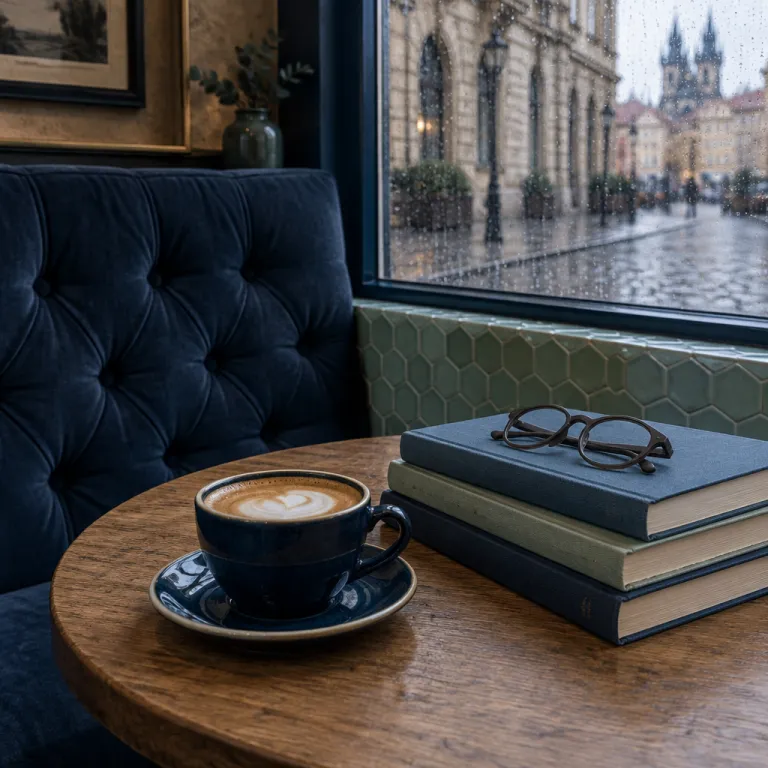
The kavárna as Prague’s quiet engine of literary life
In Prague, the classic kavárna is less a cafe than a quiet engine of cultural life. This is where the city’s literary cafes and Kafka’s legacy still feel tangible, because the room invites you to read, to think, to stay. For a solo traveler choosing a luxury hotel in the city, understanding this tradition helps you select a place that aligns with how you want to spend your time.
The Czech kavárna emerged in the late nineteenth century, when the city was a crossroads of German, Czech and Jewish intellectual circles. By the early twentieth century, writers like Franz Kafka and his friend Max Brod were using these spaces as informal offices, turning each table into a temporary study. That habit survives today, and the best hotels in Prague position you within a short walk of at least one serious literary cafe where lingering for hours is not just tolerated but expected.
Think of the kavárna as a reading room with waiters, where you can work through a book, a notebook and a slice of větrník without pressure to move on. In this context, Prague’s literary cafe culture is not nostalgia but a living pattern of behavior that shapes how locals use the city. When you book a premium room near the Old Town Square or in Malá Strana, you are also booking proximity to these places where the city’s intellectual life still keeps office hours.
Kafka’s Prague and the enduring myth of the café table
Franz Kafka was born in Prague in 1883, and the phrase “Kafka’s Prague” has become shorthand for a city where language, identity and architecture overlap in unsettling ways. The city’s literary cafes grew from this tension, as a German-speaking Jewish writer tried to make sense of a Czech town that was changing around him. When you sit in a grand kavárna today, you are occupying the same type of place where Kafka and other writers once tested their work in public.
At Café Louvre on Národní street, founded in 1902, the high ceilings and marble tables still echo with conversations in English, German and Czech, even if the clientele now includes design-conscious travelers. This was one of the rooms where Kafka, Max Brod and their circle met, and where the idea of the writer as a regular in a cafe took on its modern form. Staying in a luxury hotel near the National Theatre places you within a short walk of Café Louvre, the river and the city’s most atmospheric streets.
Across the avenue, Café Slavia faces the National Theatre and the Vltava, offering one of the most emblematic views in the city. Reopened after World War I and later a haunt of playwrights like Václav Havel, it preserves the tradition of the cafe as a public study. While the exact tables have changed, the idea remains the same: this is a place where you can read, write and watch the work of the city unfold outside the window. When you weigh what you are really paying for behind a grand hotel façade, as explored in this guide to Prague palace hotels and their true value, consider how close your room will be to these historic cafes that still function as literary offices.
From Jewish Quarter to Malá Strana: mapping a literary afternoon
A thoughtful autumn route through Prague’s literary cafes begins in the Jewish Quarter, where the memory of Kafka and other Jewish writers is anchored in the streets. Start near the Jewish cemetery and the synagogues, then walk toward the Franz Kafka statue and the nearby Kafka museum exhibitions that trace his work and his time in the city. This is where the phrase “Prague Kafka” feels literal, because the town and the writer are presented as inseparable.
From the Jewish Quarter, cross toward the Old Town Square, where the mix of tourists and locals reminds you that this has always been a stage for public life. The Kafka head sculpture by David Černý, a rotating mirrored bust near Národní třída, offers a contemporary counterpoint to the Kafka museum, turning the author into a kinetic landmark in the middle of the modern city. For a solo traveler staying in a premium hotel nearby, this axis between the Jewish Quarter, the Kafka head and the river becomes a daily corridor of literary references.
Continue across Charles Bridge into Malá Strana, where the streets narrow and the hills rise toward the castle. Here, Prague’s cafe-and-literature tradition softens into quieter corners, with smaller cafes that still encourage you to read for an hour over a single coffee. If you are extending your Czech journey beyond the capital, the same reflective mood can be found in other historic towns, as shown in this piece on staying in cathedral cities like Olomouc in October, where the rhythm of the day also revolves around a good reading chair and a well placed cafe.
What makes a great historic café for the modern traveler
The best historic cafes in Prague share a few quiet luxuries that matter more than any design trend. First, they treat time generously, allowing you to sit with a book or a laptop for hours without a raised eyebrow, which is essential if you want the kavárna to function as your temporary office. This is where Prague’s literary cafe culture aligns perfectly with the needs of a solo traveler who values unhurried space over spectacle.
Look for rooms with high ceilings, natural light and a clear view of the street, because the slow theatre of the city is part of the experience. Newspapers on wooden rods, a pastry counter that still respects Czech classics and a staff that can switch easily into English all signal a place that understands both its local role and its international audience. In such a cafe, you can read Kafka, Hašek or contemporary writers while the city moves past your window, and you never feel rushed back to your hotel.
Details matter: the weight of the porcelain cup, the way the waiter places your glass of water, the quiet hum of conversations in Czech, German and English. A grand hotel that partners with or sits above such a cafe offers more than a room; it offers a daily ritual that connects you to the city’s literary past. When evaluating luxury properties in Prague, ask not only about spa access and room size but also about which historic cafes lie within a five minute walk of the lobby.
Reading, writing and staying: planning your literary hotel base
Choosing a luxury hotel in Prague through a curated platform like myczechrepublicstay.com becomes easier when you think in terms of reading rooms rather than only room categories. If you know that your ideal afternoon involves a window seat at Café Slavia or Café Louvre, with a book and a notebook, then staying near the National Theatre or the Old Town makes practical sense. In this way, Prague’s network of literary cafes can guide your booking decisions as much as any list of amenities.
Some travelers prefer the energy around the Old Town Square, where the streets between the town hall and the river are dense with cafes, galleries and small museums. Others choose the quieter slopes of Malá Strana, trading immediate nightlife for cobbled streets, hidden gardens and a slower walk to their favorite cafe table. In both cases, a well chosen hotel becomes an extension of the reading room, offering a calm place to return after hours spent with Kafka, Hašek or the good soldier Švejk.
If your Czech itinerary includes more reflective stops, such as a visit to Terezín or other sites of memory, the contrast between those experiences and the warmth of a Prague cafe can be profound. Articles on staying in Czech castle hotels while reflecting on places like Theresienstadt show how accommodation choices shape the emotional tone of a trip. In the capital, the same principle applies: your chosen hotel and your chosen cafe together create a private, thoughtful circuit through the city’s literary and historical layers.
FAQ
Which Prague cafés are most closely linked to Franz Kafka?
Café Louvre and several former kavárna locations around Národní třída are strongly associated with Franz Kafka and his circle, including Max Brod. While the exact interiors have evolved, these places still reflect the literary cafe culture that shaped his working life. The Kafka museum and the Kafka head sculpture by David Černý provide additional context within walking distance.
Where should I stay in Prague for easy access to historic literary cafés?
For quick access to Café Slavia, Café Louvre and the National Theatre area, look for luxury hotels along Národní třída or near the river between the Old Town and Malá Strana. Travelers who prefer quieter streets and a short walk to Charles Bridge often choose premium properties on the Malá Strana side. Both areas keep you close to key literary sites, including the Jewish Quarter and several important museums.
Can I spend several hours reading or working in Prague’s historic cafés?
Yes, the traditional kavárna culture in Prague expects guests to linger, especially in larger historic rooms. Ordering periodically and being considerate of peak times is appreciated, but you can usually read, write or work for hours without pressure to leave. This unhurried approach is central to how the city’s literary and intellectual life has used cafes for more than a century.
Are Prague’s literary cafés suitable for solo travelers who do not speak Czech?
Most central cafes that are part of the city’s literary tradition are very comfortable for solo visitors, and staff typically speak English as well as Czech and often German. Menus are usually bilingual, and it is common to see people reading alone or working quietly at small tables. Choosing a hotel near these areas makes it easy to drop in for an hour or an afternoon without any social pressure.
How does Prague’s café culture compare with other European cities for readers?
Prague combines the grand rooms of Central European coffeehouses with a distinctly Czech sense of unhurried hospitality. Compared with some larger capitals, you may find it easier to secure a quiet corner table and stay with a book for an extended period. The density of historic sites, from the Jewish cemetery to the Old Town Square and Charles Bridge, means your walk between hotel and cafe is also part of the literary experience.