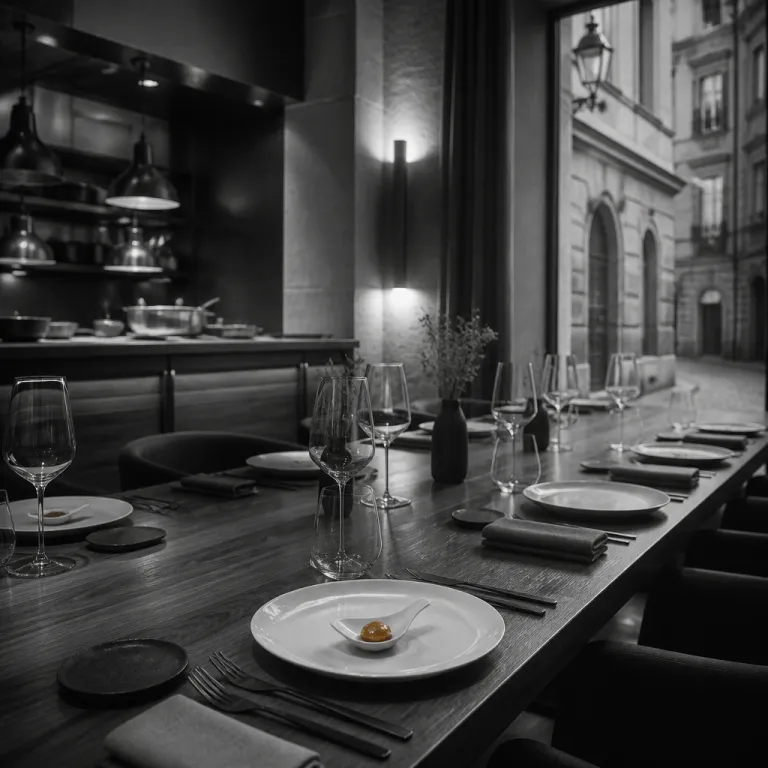
Why czech tasting menu fine dining Prague Michelin matters for hotel guests
Check into a luxury hotel in Prague and the concierge no longer pushes only castle tours and river cruises. The sharpest teams now ask how serious you are about prague food, then quietly steer you toward a czech tasting menu fine dining Prague Michelin experience that matches your schedule. For business leisure travelers, those tasting menus turn a standard work trip into a narrative about the czech republic itself.
Unlike classic French dégustation, a Czech tasting menu builds its story around local fields, forests and preserved traditions rather than imported luxury. The best restaurants in Prague use each course to argue that czech cuisine can be as precise and layered as anything in Paris, while still tasting of poppy seeds, river fish, root vegetables and orchard fruit. When you choose a hotel through a curated platform such as myczechrepublicstay.com, you gain access to concierges who understand which restaurant in Prague will fit your appetite, your time window and your need to return rested for morning meetings.
For guests booking premium suites, the question is not whether to book fine dining, but how to integrate it into a tight travel calendar. A well planned tasting menu can sit between an afternoon board meeting and a late night email session, especially when the restaurant Prague address is within a ten minute car ride. That is why serious hotels maintain relationships with star restaurants and can often secure last minute seats at a Michelin starred dining room when online reservations show nothing.
From La Degustation to Field: the thesis on the plate
The intellectual anchor of the current czech tasting menu fine dining Prague Michelin scene is La Degustation Bohême Bourgeoise, a restaurant Prague regulars shorten to “La Degustation”. Here, chef Oldřich Sahajdák, often referred to simply as chef Oldřich, builds a multi course tasting menu from 19th century Bohemian recipes, then strips them down to their essence. The result is degustation Bohême Bourgeoise as an argument that czech cuisine can be both nostalgic and razor sharp.
At La Degustation Bohême Bourgeoise, an amuse bouche might reference a village slaughter feast, while later dishes reinterpret pickled vegetables or freshwater fish with almost Japanese clarity. The carte menu is not a long list of options ; instead, you choose between focused tasting menus that move from one or two bite food moments to more generous plates, each paired with a Czech wine or a carefully built non alcoholic drink. This is where the phrase “A multi-course meal highlighting Czech ingredients and techniques.” stops being a definition and becomes lived experience.
Across the river, Field restaurant takes a different stance in the same field of ideas. Here, the course tasting structure leans into foraged herbs, wild mushrooms and game, turning the surrounding countryside into a series of dishes that feel almost Nordic, yet remain firmly czech in their use of caraway, dill and fermented elements. For travelers tracking the evolution of czech tasting menu fine dining Prague Michelin options, La Degustation and Field together show how star restaurants can share a language of precision while arguing different theses about national identity.
For readers interested in how this movement connects to the broader rise of Czech gastronomy abroad, the feature on Czech specials landing in Tokyo offers useful context on how these chefs think beyond their own dining rooms. That external perspective helps explain why a single restaurant can influence how international guests talk about the entire czech republic after one carefully staged evening.
The new wave: Levitate, Štangl and beyond
Once you have tasted the arguments at La Degustation Bohême Bourgeoise and Field, the newer generation of restaurants Prague offers feels like a lively debate. Levitate, for example, layers Asian and Scandinavian influences onto a Czech ingredient base, creating tasting menus where koji, miso and Nordic pickling techniques meet Moravian vegetables and freshwater fish. The restaurant Prague location is discreet, but inside the dining room the energy is quietly electric.
Štangl, set in the Karlín district, pushes in another direction, pairing a modern Czech tasting menu with a strong sustainability stance that has earned both a Michelin star and a Green Star. Here, a course tasting progression might move from an amuse bouche of smoked trout tartlet to dishes built around overlooked cuts of pork, all supported by a food drink pairing program that gives equal weight to natural wines and precise non alcoholic infusions. For guests staying in design forward hotels nearby, Štangl becomes the neighborhood canteen for serious diners, not a special occasion outlier.
Beyond Prague, Papilio and other Michelin starred addresses across the czech republic show how far this movement has spread. With eight Michelin starred restaurants now listed nationwide, the country has quietly become a serious stop for travelers planning a czech tasting menu fine dining Prague Michelin focused itinerary across Central Europe. If you are booking a long weekend through a premium platform, the guide to the finest Czech Republic premium resort packages can help you align spa stays, countryside resorts and urban tasting menus into one coherent journey.
For hotel guests, the practical takeaway is simple yet powerful. When you choose your property, ask not only about room size and spa access, but also which star restaurants the concierge can reach by phone rather than by generic email. A hotel that can secure a table at Levitate on a busy July evening or arrange a late seating at Štangl after your delayed flight is not just selling a bed ; it is curating your entire dining narrative.
Price, value and how to book from your hotel
One of the quiet advantages of the czech tasting menu fine dining Prague Michelin landscape is value. A full tasting menu with six to ten courses in a Michelin starred restaurant Prague often costs significantly less than an equivalent experience in Paris, Copenhagen or London, even when you add wine or non alcoholic drink pairings. For business travelers used to Western European pricing, the bill here can feel almost restrained for the level of technique and service delivered.
That does not mean you should treat these restaurants as casual drop ins. The best star restaurants in Prague run on tight seating plans, and the most coveted tasting menus can book out weeks ahead, especially around major events or peak July travel dates. This is where a well connected hotel becomes your strongest ally, using direct relationships to secure slots that online systems list as unavailable.
When you arrive, expect the staff to guide you through the carte menu options, usually a shorter and a longer course tasting format, sometimes with a vegetarian path that treats vegetables as protagonists rather than side dishes. Ask about local food drink pairings that highlight Moravian wines, small batch Czech spirits or house made ferments, rather than defaulting to international labels. If you are unsure which restaurant to choose, a concierge who knows both your schedule and your palate can position La Degustation for cerebral dining, Field for ingredient driven intensity and Levitate for cross cultural fireworks.
For those planning evenings around sightseeing, pairing a late seating with a quiet post tour stroll can be especially rewarding. Our guide on experiencing Prague Castle on your own terms after the tour groups leave shows how to structure afternoons so that a long menu never feels rushed. In practice, this means booking early dinners on heavy sightseeing days and saving the longest tasting menus for nights when your calendar is otherwise clear.
Designing a three night tasting menu itinerary from your hotel
For a business leisure traveler staying three nights in Prague, the smartest move is to treat czech tasting menu fine dining Prague Michelin options as a curated sequence rather than isolated splurges. Night one works best as an immersion in tradition, which makes La Degustation Bohême Bourgeoise the natural starting point for a degustation Bohême Bourgeoise journey. Here, chef Oldřich Sahajdák uses each amuse bouche and course to sketch a map of Bohemian memory, turning childhood flavors into polished dishes that still feel emotionally grounded.
Night two can then shift the lens to nature at Field restaurant, where the tasting menu reads like a walk through Czech forests and meadows. Expect dishes that highlight root vegetables, game and foraged herbs, often plated with a minimalism that lets texture and temperature carry the drama. This is where the thesis that czech cuisine can stand alongside Nordic cuisine without imitation becomes most persuasive, especially when the food is paired with low intervention wines from Moravia.
On the third evening, choose a restaurant Prague locals are still arguing about, such as Levitate or Štangl, to see where the movement might go next. Levitate’s tasting menus weave Asian and Scandinavian ideas into a Czech ingredient base, while Štangl’s focus on sustainability and neighborhood energy shows how fine dining can feel relaxed without losing precision. Across all three nights, your hotel’s role is to coordinate timings, arrange transport and ensure that late running meetings do not derail carefully staged menus.
For guests who want to extend this pattern beyond Prague into the wider czech republic, Papilio and other Michelin starred properties in spa towns or wine regions can be slotted between city stays. A well designed itinerary might move from a riverside luxury hotel in Prague to a countryside resort with its own ambitious restaurant, then back to the capital for one last carte menu at a star restaurant before departure. In every case, the thesis remains the same ; Czech tasting menus are no longer apologetic adaptations, but confident statements about what this cuisine can become.
How Czech tasting menus differ from French and Scandinavian models
For travelers used to French dégustation or Scandinavian tasting menus, the first surprise in Prague is the flavor palette. Where a classic French restaurant might lean on butter, cream and foie gras, and a Nordic dining room might foreground smoke, vinegar and raw seafood, czech cuisine in its modern tasting menu form reaches for caraway, poppy seeds, smoked meats, freshwater fish and orchard fruit. The result is food that feels hearty yet precise, with sauces often lightened and textures sharpened compared with traditional tavern fare.
Structure also differs in subtle ways. Many czech tasting menu fine dining Prague Michelin experiences open with a flurry of amuse bouche bites that reference pub snacks or village celebrations, then move into a sequence of dishes that reinterpret soups, dumplings and preserved vegetables with contemporary technique. Desserts frequently play with ingredients such as tvaroh cheese, plum jam or honey, reminding you that this is still Central Europe, not a generic international dining room.
Philosophically, the leading chefs are less interested in copying Paris or Copenhagen than in articulating their own field of reference. At La Degustation, chef Oldřich frames his work as “authentic, precise cuisine inspired by childhood”, while at Field the thesis is that Czech landscapes can supply everything needed for a world class menu. Across the czech republic, from Papilio to Štangl, that shared confidence has helped shift the country into lists of best places to travel for food lovers, and it is changing what luxury hotel guests now expect from a night out.
FAQ
What is a Czech tasting menu and how long does it take ?
A Czech tasting menu is a multi course meal that highlights local ingredients, traditional recipes and modern techniques in a structured progression. In Prague’s Michelin starred restaurants, you can expect six to ten courses, often preceded by several amuse bouche bites. Plan for two to three hours, depending on the length of the menu and whether you choose full drink pairings.
Which Prague restaurants offer the best tasting menus for first time visitors ?
For a first visit focused on czech tasting menu fine dining Prague Michelin experiences, La Degustation Bohême Bourgeoise and Field are essential. La Degustation offers an intellectually driven menu based on historical Bohemian recipes, while Field emphasizes foraged ingredients and a strong sense of place. Levitate and Štangl add contrasting perspectives, one more global in flavor, the other rooted in modern Czech neighborhood dining.
How far in advance should I reserve from my hotel ?
For prime weekend or July dates, aim to reserve your chosen restaurant at least two to three weeks ahead, especially for the longest tasting menus. If you are staying in a luxury or premium hotel, contact the concierge as soon as your travel dates are fixed and let them know which restaurants Prague you are considering. They can often secure better time slots or waitlist positions than you will see through public booking platforms.
Are Czech tasting menus suitable for business dinners ?
Yes, many Michelin starred restaurants in Prague are well suited to business dining, with calm acoustics, polished service and flexible pacing. When booking through your hotel, mention whether you need a shorter course tasting format or a private table for confidential discussions. The staff can then adjust the menu length and drink pairings to fit a two hour window rather than a long celebratory evening.
How do prices compare with other European fine dining cities ?
In general, tasting menus in Prague’s Michelin starred restaurants cost noticeably less than comparable experiences in Paris, Copenhagen or London, while offering similar levels of technique and hospitality. You will still be paying premium prices by local standards, especially once you add wine or non alcoholic pairings, but many travelers feel the value is strong. For hotel guests used to major Western European capitals, Prague often feels like an opportunity to explore ambitious cuisine without the highest tier price tag.